Zeshan M. Hussain
Internal Medicine Resident, Brigham and Women's Hospital. MD–PhD, Harvard Medical School · MIT EECS.

📍Boston, MA
Hello! I am an internal medicine resident at Brigham and Women’s Hospital and an MD–PhD graduate of the Harvard–MIT Health Sciences and Technology (HST) program. I completed my PhD at MIT EECS with the Clinical ML group, advised by David Sontag.
My research develops machine learning methods for partially observed, intervention-driven environments, using oncology as a rigorous test bed. I work across representation learning, causal inference, sequential decision-making, and physician-AI collaboration, with the goal of building AI systems that model latent disease dynamics, reason about interventions, and improve safely over time. Current directions include sample-efficient clinical LLMs, integration of real-world and experimental evidence for causal effect estimation, and physician interaction with AI recommendations.
Previously, I completed my B.S. and M.S. in Computer Science from Stanford University, where I worked on deep learning for medical imaging and data augmentation with Daniel Rubin and Chris Ré.
Research
My work focuses on building ML methods that are both statistically rigorous and clinically deployable, with precision oncology as the primary application. I have pursued research along three themes:
-
How will my patient respond holistically to a chosen therapeutic regimen? Oncologists approach treatment selection multifactorially — maximizing survival, minimizing adverse events, improving quality of life. I have built predictive models of longitudinal patient trajectories that provide multitask predictions to support this kind of holistic management [npj Digital Medicine, 2024]. A key bottleneck is labeled data scarcity; more recently, I have studied how LLMs can construct powerful clinical representations to dramatically improve sample efficiency for downstream prediction tasks [NeurIPS 2026].
-
How can I trust the causal and predictive estimates my model produces? Observational data is pervasive in oncology, but estimates derived from it are often seen as unreliable without validation. I have developed falsification methods that use RCT data to detect and characterize bias in observational studies [NeurIPS 2022] [AISTATS 2023] [ICML 2026], and uncertainty quantification methods that produce valid confidence intervals for ML model predictions [AISTATS 2023].
-
How will AI-based decision support change how physicians make decisions? Deploying AI in the clinic requires understanding how physicians actually use model outputs. I built a prototype clinical decision support system and ran user studies examining how AI recommendations shape physician decision-making in simulated multiple myeloma patients [ACM Transactions on Computing for Healthcare, 2026].
News
| Sep 24, 2026 | Paper accepted at NeurIPS 2026 – LLMs Can Construct Powerful Representations and Streamline Sample-Efficient Supervised Learning. |
|---|---|
| May 01, 2026 | Paper accepted at ICML 2026 – Uncovering Bias Mechanisms in Observational Studies via Predictive Performance. |
| Apr 15, 2026 | Paper accepted at ACM Transactions on Computing for Healthcare – Evaluating Physician-AI Interaction for Cancer Management: Paving the Path toward Precision Oncology. |
| Jul 01, 2025 | Started Internal Medicine Residency at Brigham and Women’s Hospital, Boston, MA. |
| Oct 03, 2023 | Talk at Stanford MedAI Series – Benchmarking Causal Effects from Observational Studies using Experimental Data |
Selected Publications
- HCI
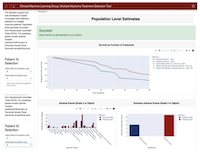 Evaluating Physician-AI Interaction for Cancer Management: Paving the Path toward Precision OncologyACM Transactions on Computing for Healthcare, Jun 2026in press


